But, some people have refused to vote until they see my camp hair. So, I took this picture today, at the beginning of day 4 in the field:

See? I told you it wasn't very good.
Keep on voting!
 Festively dressed, Mike is sporting his favorite "spiked" camp hair-do. He masters this look using sweat, sunblock, and anything else that happens to be on his hands when he runs them through his hair. In the field, Mike's hair just defies gravity every single day. In the photo, he has been in the field for 5 days straight.

 Nate's hairdo is what we call the "twisted" look. Nate's naturally curly hair is enhanced by weeks upon weeks in the field, as Lake Fryxell is his permanent home during the entire field season. Weekly camp showers at Lake Hoare can't keep Nate's hair subdued! See how happy he is to have good camp hair?


 We have a lot of pick-up trucks here for carrying cargo and supplies between buildings. Our pick-up trucks have bigger wheels, and the bodies are jacked up off the wheels. Larger wheels have more surface area in contact with the ground than smaller wheels. That means that the weight of the truck and the cargo are spread over a greater area, lessening the chance of sliding on the ice or loose gravel. All of the trucks are 4-wheel drive, and have special brakes that keep them from sliding when parked.
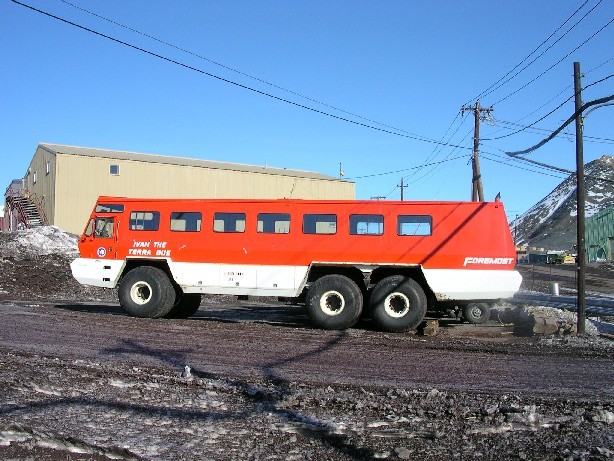
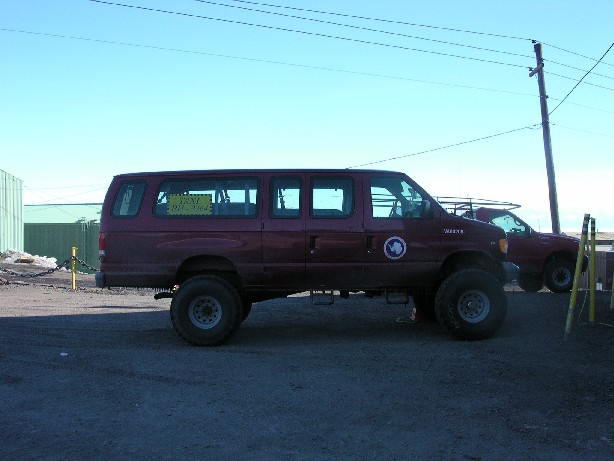 We also have taxis here at McMurdo for carrying people around town or between stations. These are not the yellow taxis like you'd find in the U.S., but 4x4 vans with big wheels!
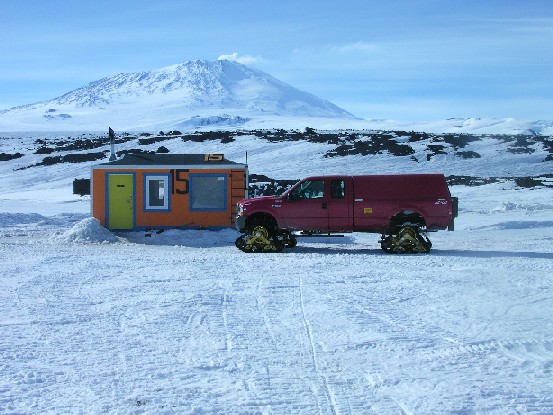 used to drive over the transition onto the sea ice. The track wheels can span crevices in the ice and keep good traction with the ground, so are safer than normal wheels for traveling on ice.
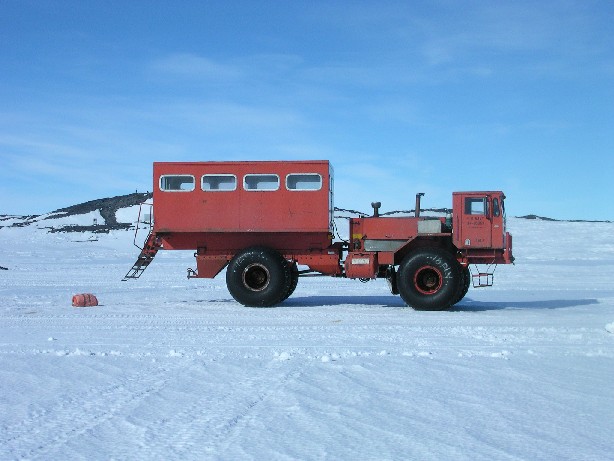
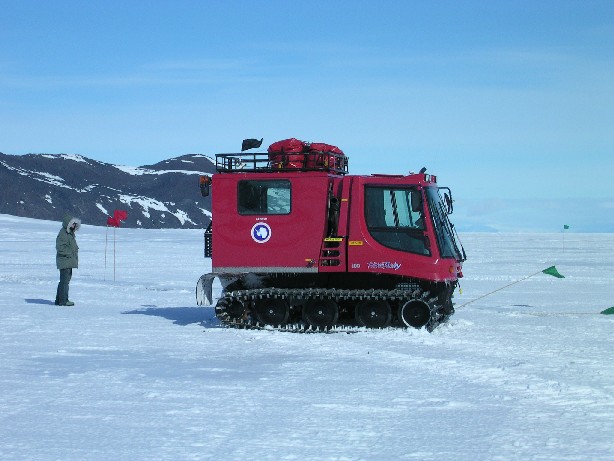 There are also other types of transport trucks that are special to McMurdo. Delta's are used to transport people on the ice roads out of McMurdo. You can take the Delta to get to the air fields, the New Zealand research base nearby, field camps on the ice, and other places on the sea ice. The tires are HUGE (taller than a second grader!). When you ride in the back of a Delta, you have to wear a seat belt. They're so tall that they rock very far when going over large bumps and cracks. If you're not wearing a seatbelt, you slide right out of your seat!
 We visited two places in Wright Valley. First went to the Dais, which is a flat, elevated area with very interesting soils.
 The carbon in the soil (which soil animals eat to get their energy) is very different from other soils we've looked at. This is why we wanted to go back and look some more! We took soil samples from many different places around the Dais, and we've brought it back to the lab. We will analyze the soil to learn more about the carbon and other nutrients from all over the Dais. Here is a picture of the four of us after our sampling at the Dais:

 The territorial claims made before the treaty are still recorded, though they are suspended. Seven countries have territorial claims. These claims are pie-wedges of Antarctica that start at the South Pole and extend outward. McMurdo is on New Zealand's suspended territorial claim.

 Mosses grow in most places around the world. You've seen them before, especially growing in or near streams or other wet places. There are many different types of mosses around the world. But, here in the Dry Valleys of Antarctica, there are only four species off moss. They are the only plants that grow in the soil. So, on Antarctica, moss patches are equivalent to redwood forests in the U.S.! Here is Elizabeth sitting next to an Antarctic "forest":


 Posts
All Comments


