Tuesday, January 26, 2010

A Little Bit of Green in Antarctica

As you've seen from my blog, Antarctica is cold, dry, and gray. But, there's one oasis in this polar desert: the McMurdo Greenhouse.

[Photo credit: www.sethwhite.org]

While it looks like any other McMurdo building on the outside (except for the vegetable decorations), inside the greenhouse it is warm, humid, bright, and full of greenery!
[Photo credit: www.sethwhite.org]

Unlike greenhouses in the U.S., the McMurdo Greenhouse is not made of glass. It is too cold for that! Instead, it is a sealed and insulated building, with a giant refrigerator door to get inside. "Sunlight" comes from high intensity discharge lamps, and the walls are covered in reflective foil to increase the light intensity from the lamps. To maintain a proper temperature, the greenhouse is heated by a furnace at night and the lamps during the day.

[photo credit: www.schundler.com]
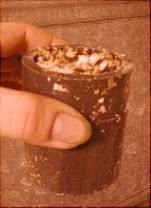
Because Antarctica's environment is protected by the Antarctic Conservation Act, we are not able to import gardening soil to grow vegetables here. So, the greenhouse uses a hydroponic system to grow vegetables, meaning that vegetables are grown in water instead.

How this works: Each plant is seeded in a "plug". The plug is a short piece of PVC pipe. In the pipe, there's a combination of vermiculite and Perlite (little pellets that you can buy from a company), which give the roots of the plant something to hold onto. The plugs are then placed in the shelves you see in the photo above. The shelves have a circulating reservoir system of water moving through them. The water is heated and aerated, and nutrients are added to the water to be carried directly to the plants growing in the plugs on the shelf. That gives the plant everything it needs! Each day, measurements are made on the water, and the nutrient content and pH are adjusted by hand. All of the water is recycled within the reservoir system for that shelf. There is a separate reservoir system for each type of plant, so water from the peppers doesn't mix with the water for the tomatoes. All of this is maintained by just one person!

The greenhouse grows a variety of vegetables. In the past, we've had lettuce, spinach, chard, cucumbers, tomatoes, peppers, herbs, and even flowers! The harvests are mainly useful for the winter crew, when airplanes aren't able to deliver fresh vegetables from New Zealand. The greenhouse can provide enough vegetables for the winter crew (up to 230 people) to have a salad every few days, plus some veggies for the cook to use in regular meals. During the summers, the population at McMurdo is too big for the greenhouse to supply completely, so it can only supplement the shipments of "freshies" flown down from New Zealand. But, more importantly, it provides a little piece of "summer" relaxation to the folks experiencing months of cold and gray, and many people visit just for the atmosphere.

Besides the great environment for relaxation and the ability to eat fresh vegetables, I've used the greenhouse in the past to test out our field equipment. The machines we use to measure gas flux (the LICOR) can measure not only soil respiration, but also photosynthesis (which is, essentially, the reverse process of respiration. So, instead of measuring a production of CO2, the machine measures a reduction in CO2.) Since the mosses we study in the dry valleys are so slow-growing, we need to know that the LICOR is working perfectly to measure such small amounts of photosynthesis before we take it to the field. The best place to test out the machinery is in a place where there's a lot of photosynthesis: a greenhouse!

However, this year, they decided not to open the greenhouse for the summer and rely completely on shipments of freshies, which is very unfortunate. I miss my regular visits with the plants, and we couldn't test our LICOR! I hope they change their mind for next summer.

Sunday, January 24, 2010

Orca Sighting

As we come into late summer here in Antarctica, the sea ice covering the Ross Sea has melted back almost as far as McMurdo. That means that our helicopter rides back to McMurdo from the dry valleys start to scoot along the edge of open ocean, rather than traveling over solid ice. This makes for great sight-seeing, because there's so much life in the open ocean, even all the way down here! On the ice edge, we see penguins (both Emperor and Adelie), seals, and a lot of whales.

When we flew back from F6 on Saturday, we saw a lot of orcas. My camera doesn't do a great job from a distance, but in this video you can see a lot of them surfacing:


Orcas live just about everywhere in the world, but they tend to prefer polar waters, such as the Ross Sea of Antarctica where I am. They tend to stick to coastal areas, because that's where their food lives. While orcas are commonly called "killer whales", not all of them behave like killers. There are several types of orcas that we could see down here: Type A, B, and C. Type C are the smaller orcas that you see in the video. They have a duller white saddle (that white patch behind their dorsal fin) and eat fish. That's why they're along the ice edge here. The ice has just melted and broken away, so there's a lot of fish now without protection!

Type B are bigger and eat larger animals like seals (and penguins, if they were able to catch them, but penguins are usually too fast). In fact, when I met Sir David Attenborough last weekend, he narrated for us footage the BBC had recently shot of several orcas creating a wave to knock a seal off of a floating ice chunk and into the water so they could eat it!

Type A are the biggest and eat even larger animals, like minke whales. We also have a lot of minke whales in our waters here. In fact, we can see them from outside our lab window in the channel cut by the icebreaker! Minke whales are smaller, baleen whales. Baleen whales are a type of whale that have a plate for filtering small plankton from the water (rather than teeth for eating animals). So, minkes are related to humpback whales and Right whales, which are also baleen whales. It's easy to tell the difference between an orca and a minke because of the size, but also the shape of the dorsal fin. A minke's dorsal fin is small and curved. It looks kinda like the satellite radio antennas that you see on cars. (See what I mean using the photo on Wikipedia.)

We are hopefully going to the field tomorrow to visit Cape Crozier, the final penguin rookery I'd like to sample. Keep your fingers crossed that the weather cooperates!

Friday, January 22, 2010

3rd Annual Camp Hair Contest!

It is time for the Third Annual McMurdo Field Camp Hair Contest!

The water restrictions in the dry valleys means that we are not able to shower or wash our hair while we're out at field camps. That means that people's hair gets very dirty and oily, which of course leads to some very fabulous hair-do's! This is what we call having "camp hair." Having great camp hair is a matter of pride, and the person with the best camp hair is honored throughout McMurdo. So, once again, I'm going to leave it up to everyone reading my blog to decide who has the best camp hair for the 2009-10 field season. Review the photos below of our "camp hair" contestants, and send in your vote! Anyone reading this is welcome to vote, and can do so by sending an email with your choice to me.

Let's meet this year's contestants!

Michael:Stream Team member Mike has been living in the field at F6 since October, far from the comforts of civilization such as running water and a razor... and probably a mirror. Unfortunately for Mike, his "fierce grimace" has not aided the success of his attempted life as a pirate marauding the Ross Sea.

Julia:Fresh after her visit to the Wool Hat Salon, Julia is sporting her fashionable hat-hair look. Nine and a half hours of hiking, 4 soil pits, and an 85 pound backpack are all ingredients for this stylish look. See how happy she is to be able to finally take her hat off?


Jeff:Environmental engineering graduate student and temporary dweller of F6 Camp, Jeff engineers this gravity-defying look every day. Weekly camp showers at Lake Hoare can't keep his hair down! His sheer enthusiasm for field work is evident in this photo!

There they are: the 2009-10 season's Best Camp Hair contestants. May the voting begin! The champion Camp Hair will be declared in 5 days.

Thursday, January 21, 2010

Back at F6

We finally made it back to one of the penguin rookeries that we needed to visit. After two days of trying to get to Cape Crozier but being stopped by bad weather, we decided to try for Cape Bird instead. Ross and I made it there on Wednesday. Finally, we were able to get some more of our sampling done! We did the same time of sampling at Cape Bird as we did at Cape Royds. It is interesting to do this at different rookeries because each of the three rookeries we want to visit have different sizes of penguin colonies living there. Cape Royds has several thousand breeding pairs of penguins, and Cape Bird has about 25,000. Cape Crozier has over 100,000! That means that "high activity" will be different at each of the rookeries, and we'll be able to learn more about the influence of different levels of penguin activity than we would at just one site.

There was one very curious penguin at one of our sampling spots. It wanted to inspect everything we were doing. At one point it even pecked at the shovel I was using! Here it is approaching Ross to see what he's doing with that sample bag:

I learned something very interesting about Adelie penguins while I was there! They have spiny tongues! Penguins eat krill, which are small shrimp-like animals that live in the ocean. The spines on the Adelie's tongue helps them hold onto and swallow the little krill. Here's a photo of an Adelie tongue that I found online:
[photo credit: www.penguinscience.com]

So that's what I did yesterday. Today I am back at F6 for the next few days to finish up some projects in the Fryxell Basin. Let's hope the weather stays as beautiful as it is today!

Wednesday, January 20, 2010

There's more than just penguins here!

When people think of animals that live in Antarctica, they almost always think of penguins, seals, and whales. And, while those animals do live down here, they don't live on most of the continent. They only live in or near the water, and not on the actual continent (except for penguin rookeries, like I've shown you). But, there are animals that do live on the actual continent! You just can't see them, because they're microscopic. Most of our studies focus on how these animals respond to changes in environmental conditions and influence biogeochemical cycling. So, it's important for me to tell you more about them! Here's some information about the main types of micro-organisms that live in Antarctic soils.

Nematodes
Also called roundworms, nematodes live EVERYWHERE in the world. You can find them in every biome in the world. They live in water, soil, ice, even in other animals! They are the most abundant animal in the world. In the dry valleys, we find more nematodes than any other animal. They are what our collaborators at Colorado State focus on studying. We have three main species that live here. The most numerous species, Scottnema lindsayae, is in the photo to the left.

Nematodes eat a lot of different things. Some, like the guy at the left, eat bacteria. Others eat fungi or algae, and some are even predators that eat other microscopic soil organisms. In the dry valleys, a predatory nematode is the top of the food chain!

Rotifers
https://en.wikipedia.org/wiki/Rotifer
Rotifers also live in a lot of different environments, including fresh water, saltwater, soils, and other watery environments. A rotifer eats by waving the hairs around its mouth (at the top, in this picture) to catch things floating in the water. The moving action around their mouth looks kind of like a wheel, which is how they got the name ROTifer (like rotate). The "foot" (at the bottom of the picture) is to anchor the rotifer when it doesn't want to move.

Tardigrades
Tardigrades are also called water bears, and looking at the picture I think you can see why! They even have claws at the end of their feet, which you can see in this very close-up microscrope picture that Uffe took of a tardigrade foot. The claws let them hold on to something as they float through water or the water-filled spaces in the soil. Tardigrades eat with a stylet that they use to pierce animal and plant cell walls.

Tardigrades are able to live in a lot of extreme environments, and are found everwhere from the Himalayas to the ocean floor to Antarctica. They can withstand the pressure of a vaccuum, radiation, dehydration, and both incredibly high and low temperatures. There are even experiments that test tardigrades' ability to live in open space! In the dry valleys, they especially like to live in the moss and algae patches, where food and water are readily available.

The soil environment in the dry valleys is a very hard place to be an animal. There's not a lot of water, not a lot to eat, and it is very cold! Most of these micro-organisms have a special ability to help survive in such a harsh environment. They can go into anhydrobiosis, which essentially means they can freeze-dry themselves. They can push out all of their water and curl up, so that they don't freeze and die. Their metabolism drops to almost a stand-still! They can stay in anhydrobiosis for a very long time, and immediately wake up if water becomes available.

In addition to invertebrates like these guys, we also study microbes: the bacteria and fungi. These are more abundant in the soils than the invertebrates and have a larger role in the cycles we study. We look at the bacteria and fungi through our lab work and measuring CO2 flux. But, they aren't as cute to look at in a blog posting!

Monday, January 18, 2010

Waiting for a Helo... AGAIN!

We've been trying for the past two days to get to Cape Crozier, one of the other penguin rookeries we want to sample. But, bad weather strikes again! We haven't been able to make it. So, we've been spending our time processing samples in the lab.

It's very busy in the lab when we're all working. A lot of different things are happening at once. In this video, Uffe is in the laminar flow hood (in the back) weighing soil samples to be extracted for invertebrates, which he puts on the sink for Diana to process. She uses tap water to rinse the soil through a sieve and capture the invertebrates in a very small-mesh sieve. Zach is on the other side of the lab centrifuging samples, and every now and then he pops into view to bring Uffe a new sample. Once Uffe has poured soil into a beaker for invertebrate extraction, he then pours part of the sample into a sieve for me. I sieve the sample to remove all of the rocks, then pour the soil into a bag for storage. We'll take that bag of soil back to Dartmouth to measure chemistry. The rocks go into the waste bucket, and I wipe the sieve for the next sample. Meanwhile, Julia is measuring soil samples into tin cans for soil moisture. She keeps going to the fridge to get a new sample, weigh out 20 g, record the weight, then bring it back to the fridge. Jenn is just off-camera measuring pH and EC on her soil samples.


Hopefully we'll be able to make it to a rookery tomorrow!

Sunday, January 17, 2010

Dr. Becky Meets her Hero in Antarctica

We've had a very special guest in town at McMurdo for the past week or two. Sir David Attenborough is down filming for his new nature series called Frozen Planet. This is the man who has narrated so many great nature series for the BBC. I grew up with The Trials of Life. You might know him from Planet Earth. You might not recognize his name or his face, but you know his voice, especially if you're my age. I have been SO EXCITED that he's here, because he is one of the inspirations behind me becoming a biologist. My sister and I have watched The Trials of Life over and over again since we were kids. Sir David's films make the many amazing aspects of our natural world so accessible and exciting to kids (and adults!), and he's been a major inspiration for most biologists my age.

So, I can't even tell you how excited I was when I actually got to meet Sir David last night!! I was able to tell him how big of an influence he has been and about what kind of research I do here in the dry valleys. Here's me with my hero:I also asked Sir David what he thought was the most amazing thing he's seen in Antarctica. His answer: the Trans-Antarctic Mountains. That's the mountain range that runs through the continent dividing it into an East and West half. It's one of the longest mountain chains in the world! Mountain ranges like the Trans-Antarctics are created through a process called "uplift", where two plates are pushed together, and the force of them being pushed together causes the contact point between the two plates to rise up. The presence of the mountains is what prevents the ice sheet from flowing in the valleys, creating the dry valleys where I work. Sir David thinks they're amazing because not only are they beautiful and created through such an amazing feat of nature, but because of the huge challenge they've posed for humans for over a century. When the early explorers were seeking the South Pole, they started from the Ross Sea (where I am) and had to attempt to cross through the Trans-Antarctic Mountains. Crossing these mountains posed a huge danger and required a large amount of hard work under grueling conditions for the early explorers, and frequently groups were stopped by the presence of the mountains. It's just one way that nature is more powerful than man!

So, last night was a very special moment for me. When I was a kid watching the Trials of Life on video, I never would've thought that many years later I'd meet Sir David Attenborough all the way in Antarctica!