Friday, January 29, 2010

One Final Weather Delay?

We are currently waiting for our transport to Pegasus Airfield to catch our flight back to Christchurch, New Zealand. We woke up this morning to low clouds and snow, so we are concerned that we will have one more weather delay to our field season!

Since weather has had such a big influence on our field season this year, I thought it would be appropriate to blog about some of the neat weather-related sites we've seen this year.

Lenticular CloudsThis is a cloud formation we saw when we were trying to fly to Cape Crozier. Mt. Erebus is the southern-most active volcano in the world, and it sits on Ross Island, overlooking McMurdo Station. Flying to the penguin rookeries on Ross Island has taken us in a circle around Mt. Erebus. The first time we tried to fly to Cape Crozier, it was very windy! These lenticular clouds form at high altitudes when winds moving over a mountain circulate on the downwind side. If the temperature is cold enough, moisture in the air condenses and forms clouds. They are aligned perpendicularly with the wind and form a lens shape, hence the name "lenticular". Pilots tend to avoid lenticular clouds, because when they form, you know there is wind and turbulence!

Low Ceiling

When we finally made it to Cape Crozier, the weather was nice. By the end of the day, however, a cloud system had moved in to cover Ross Island. When that cloud cover sits very low to the ground, it's called a "low ceiling" because the cloud cover is so dense, it's like having a roof over your head. Above the cloud layer, helicopters can fly, because pilots can see in front of them. But, they can't fly through a ceiling, because all they would see is white (and it's dangerous when your pilot can't see in front of him!). If the ceiling isn't too low, pilots can also fly under it. That was the case when we were at Crozier. We could fly above or below the ceiling, just not through it. Luckily for us, our pilot found a "window", or a break in the ceiling, to get us out of Crozier and above the ceiling. We flew at a higher altitude over the island, where we could see over the clouds. So you can see the ice covering the base of Mt. Erebus at higher altitude, and the low ceiling surrounding it. McMurdo Station is below that ceiling! Luckily, our pilot found a hole in the ceiling on the other side of the island that got us back below the ceiling so we could land at McMurdo. This is what it looked like as we were dropping back below the ceiling. Cloud ceiling above our heads, low-elevation coastal Ross Island below.
Cloud MiragesThis is the view we had last night from our lounge window that looks out over the Ross Sea. The mirage is the mirror image of the mountains hovering just above them! This happens when the air is very pure and dry and there's virtually no wind, like last night. There also needs to be a strong difference in air and ground temperature. Light refraction in cold, dense air causes the reflection to occur in the clouds. The mirage we saw moved throughout the evening. Sometimes the reflection was low, so that the actual mountains and reflection melded together, but they would separate again like you see here.

The same weather system that brought us those mirages are what brought us snow this morning, and we're concerned will keep us from leaving for Christchurch today! We are supposed to transport to the airfield in just a couple hours, so we hope the plane will be able to land and take us back north. Keep your fingers crossed!

Thursday, January 28, 2010

Shackleton's Hut

Antarctica has a rich history of exploration. Since the 1800's, explorers have been traveling to Antarctica in search of adventure, scientific discovery, and fame. When we were at Cape Royd's, we were able to visit one of the huts built during that period.


The hut was built for an expedition led by Ernest Shackleton in 1908. Shackleton and his crew traveled to the McMurdo area on what is called the Nimrod Expedition. A lot was accomplished on this expedition. Some members of the crew were the first to climb Mr. Erebus, the southern-most active volcano that is located on Ross Island. Others reached the south magnetic pole (which is not the same as the geographic pole). However, their main objective was the reach the geographic south pole. Four team members, including Shackleton, set off from Cape Royds and forged a new trail towards the pole in the spring of 1908. Almost a year later, in January 1909, they were within 97 miles of the pole. At that point, they realized that they did not have enough supplies to reach the pole and still be able to return to the hut alive, so they turned around, never making it to the pole. It must've been such a hard decision for Shackleton... to turn back and not reach his goal, even after enduring so much hardship for that goal, in order to ensure that his entire party survived. Still, they had reached a point farther south than anyone else had at that point, which was definitely an accomplishment.

The hut from this expedition still stands today, 100 years later. This was their shelter as they prepared for their journeys- their home-base. The hut was not luxurious! It is small, and basically one large room. A few dividing walls inside the hut were made out of food and fodder supply boxes. In addition to sleeping quarters, the hut housed a biology lab, dark room, printing press, kitchen, library, scientific and surveying equipment, and an acetylene gas generator so that they could have lights!


That big, cast iron stove is how they heated the hut, cooked their meals, baked their bread, and melted ice for water. On the shelves, you can see the remains of their food stores: things like tinned meat, dehydrated vegetables, bottled soup, cabin bread. Not too different from the kind of things we eat in the field now!

Shackleton had his own canvas-lined room, but the other 14 men shared the rest of the space. They lived in two-bed cubicles divided by canvas and slept on home-made beds from spare parts around camp.


It's definitely amazing what these early explorers could do! They persevered through harsh conditions with much fewer resources than we have available to us today. They were able to accomplish amazing things for science through their efforts. It really puts into perspective how relatively easy it is for us to come down and do our research using airplanes, helicopters, trucks, solar energy, and polartec fleece!

This is our last day on the ice! We have packed up the lab, shipped our samples, and tomorrow we should be flying back to Christchurch! The season has gone by very quickly, but it has been a successful and productive one.

(Learn more about the Nimrod Expedition by going here.)

Wednesday, January 27, 2010

Camp Hair Contest Winner

The 5 days have passed, and the votes have been tallied. The winner of the 2008-09 Best Camp Hair Contest is...

JULIA!!!!

Julia celebrates her victory in her "fancy duds", flexing her camp hair power.
Congratulations, Julia!

Tuesday, January 26, 2010

A Little Bit of Green in Antarctica

As you've seen from my blog, Antarctica is cold, dry, and gray. But, there's one oasis in this polar desert: the McMurdo Greenhouse.

[Photo credit: www.sethwhite.org]

While it looks like any other McMurdo building on the outside (except for the vegetable decorations), inside the greenhouse it is warm, humid, bright, and full of greenery!
[Photo credit: www.sethwhite.org]

Unlike greenhouses in the U.S., the McMurdo Greenhouse is not made of glass. It is too cold for that! Instead, it is a sealed and insulated building, with a giant refrigerator door to get inside. "Sunlight" comes from high intensity discharge lamps, and the walls are covered in reflective foil to increase the light intensity from the lamps. To maintain a proper temperature, the greenhouse is heated by a furnace at night and the lamps during the day.

[photo credit: www.schundler.com]
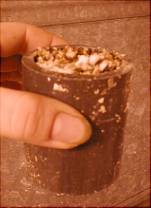
Because Antarctica's environment is protected by the Antarctic Conservation Act, we are not able to import gardening soil to grow vegetables here. So, the greenhouse uses a hydroponic system to grow vegetables, meaning that vegetables are grown in water instead.

How this works: Each plant is seeded in a "plug". The plug is a short piece of PVC pipe. In the pipe, there's a combination of vermiculite and Perlite (little pellets that you can buy from a company), which give the roots of the plant something to hold onto. The plugs are then placed in the shelves you see in the photo above. The shelves have a circulating reservoir system of water moving through them. The water is heated and aerated, and nutrients are added to the water to be carried directly to the plants growing in the plugs on the shelf. That gives the plant everything it needs! Each day, measurements are made on the water, and the nutrient content and pH are adjusted by hand. All of the water is recycled within the reservoir system for that shelf. There is a separate reservoir system for each type of plant, so water from the peppers doesn't mix with the water for the tomatoes. All of this is maintained by just one person!

The greenhouse grows a variety of vegetables. In the past, we've had lettuce, spinach, chard, cucumbers, tomatoes, peppers, herbs, and even flowers! The harvests are mainly useful for the winter crew, when airplanes aren't able to deliver fresh vegetables from New Zealand. The greenhouse can provide enough vegetables for the winter crew (up to 230 people) to have a salad every few days, plus some veggies for the cook to use in regular meals. During the summers, the population at McMurdo is too big for the greenhouse to supply completely, so it can only supplement the shipments of "freshies" flown down from New Zealand. But, more importantly, it provides a little piece of "summer" relaxation to the folks experiencing months of cold and gray, and many people visit just for the atmosphere.

Besides the great environment for relaxation and the ability to eat fresh vegetables, I've used the greenhouse in the past to test out our field equipment. The machines we use to measure gas flux (the LICOR) can measure not only soil respiration, but also photosynthesis (which is, essentially, the reverse process of respiration. So, instead of measuring a production of CO2, the machine measures a reduction in CO2.) Since the mosses we study in the dry valleys are so slow-growing, we need to know that the LICOR is working perfectly to measure such small amounts of photosynthesis before we take it to the field. The best place to test out the machinery is in a place where there's a lot of photosynthesis: a greenhouse!

However, this year, they decided not to open the greenhouse for the summer and rely completely on shipments of freshies, which is very unfortunate. I miss my regular visits with the plants, and we couldn't test our LICOR! I hope they change their mind for next summer.

Sunday, January 24, 2010

Orca Sighting

As we come into late summer here in Antarctica, the sea ice covering the Ross Sea has melted back almost as far as McMurdo. That means that our helicopter rides back to McMurdo from the dry valleys start to scoot along the edge of open ocean, rather than traveling over solid ice. This makes for great sight-seeing, because there's so much life in the open ocean, even all the way down here! On the ice edge, we see penguins (both Emperor and Adelie), seals, and a lot of whales.

When we flew back from F6 on Saturday, we saw a lot of orcas. My camera doesn't do a great job from a distance, but in this video you can see a lot of them surfacing:


Orcas live just about everywhere in the world, but they tend to prefer polar waters, such as the Ross Sea of Antarctica where I am. They tend to stick to coastal areas, because that's where their food lives. While orcas are commonly called "killer whales", not all of them behave like killers. There are several types of orcas that we could see down here: Type A, B, and C. Type C are the smaller orcas that you see in the video. They have a duller white saddle (that white patch behind their dorsal fin) and eat fish. That's why they're along the ice edge here. The ice has just melted and broken away, so there's a lot of fish now without protection!

Type B are bigger and eat larger animals like seals (and penguins, if they were able to catch them, but penguins are usually too fast). In fact, when I met Sir David Attenborough last weekend, he narrated for us footage the BBC had recently shot of several orcas creating a wave to knock a seal off of a floating ice chunk and into the water so they could eat it!

Type A are the biggest and eat even larger animals, like minke whales. We also have a lot of minke whales in our waters here. In fact, we can see them from outside our lab window in the channel cut by the icebreaker! Minke whales are smaller, baleen whales. Baleen whales are a type of whale that have a plate for filtering small plankton from the water (rather than teeth for eating animals). So, minkes are related to humpback whales and Right whales, which are also baleen whales. It's easy to tell the difference between an orca and a minke because of the size, but also the shape of the dorsal fin. A minke's dorsal fin is small and curved. It looks kinda like the satellite radio antennas that you see on cars. (See what I mean using the photo on Wikipedia.)

We are hopefully going to the field tomorrow to visit Cape Crozier, the final penguin rookery I'd like to sample. Keep your fingers crossed that the weather cooperates!

Friday, January 22, 2010

3rd Annual Camp Hair Contest!

It is time for the Third Annual McMurdo Field Camp Hair Contest!

The water restrictions in the dry valleys means that we are not able to shower or wash our hair while we're out at field camps. That means that people's hair gets very dirty and oily, which of course leads to some very fabulous hair-do's! This is what we call having "camp hair." Having great camp hair is a matter of pride, and the person with the best camp hair is honored throughout McMurdo. So, once again, I'm going to leave it up to everyone reading my blog to decide who has the best camp hair for the 2009-10 field season. Review the photos below of our "camp hair" contestants, and send in your vote! Anyone reading this is welcome to vote, and can do so by sending an email with your choice to me.

Let's meet this year's contestants!

Michael:Stream Team member Mike has been living in the field at F6 since October, far from the comforts of civilization such as running water and a razor... and probably a mirror. Unfortunately for Mike, his "fierce grimace" has not aided the success of his attempted life as a pirate marauding the Ross Sea.

Julia:Fresh after her visit to the Wool Hat Salon, Julia is sporting her fashionable hat-hair look. Nine and a half hours of hiking, 4 soil pits, and an 85 pound backpack are all ingredients for this stylish look. See how happy she is to be able to finally take her hat off?


Jeff:Environmental engineering graduate student and temporary dweller of F6 Camp, Jeff engineers this gravity-defying look every day. Weekly camp showers at Lake Hoare can't keep his hair down! His sheer enthusiasm for field work is evident in this photo!

There they are: the 2009-10 season's Best Camp Hair contestants. May the voting begin! The champion Camp Hair will be declared in 5 days.

Thursday, January 21, 2010

Back at F6

We finally made it back to one of the penguin rookeries that we needed to visit. After two days of trying to get to Cape Crozier but being stopped by bad weather, we decided to try for Cape Bird instead. Ross and I made it there on Wednesday. Finally, we were able to get some more of our sampling done! We did the same time of sampling at Cape Bird as we did at Cape Royds. It is interesting to do this at different rookeries because each of the three rookeries we want to visit have different sizes of penguin colonies living there. Cape Royds has several thousand breeding pairs of penguins, and Cape Bird has about 25,000. Cape Crozier has over 100,000! That means that "high activity" will be different at each of the rookeries, and we'll be able to learn more about the influence of different levels of penguin activity than we would at just one site.

There was one very curious penguin at one of our sampling spots. It wanted to inspect everything we were doing. At one point it even pecked at the shovel I was using! Here it is approaching Ross to see what he's doing with that sample bag:

I learned something very interesting about Adelie penguins while I was there! They have spiny tongues! Penguins eat krill, which are small shrimp-like animals that live in the ocean. The spines on the Adelie's tongue helps them hold onto and swallow the little krill. Here's a photo of an Adelie tongue that I found online:
[photo credit: www.penguinscience.com]

So that's what I did yesterday. Today I am back at F6 for the next few days to finish up some projects in the Fryxell Basin. Let's hope the weather stays as beautiful as it is today!