Saturday, November 15, 2014
I'm off!
Today the journey begins! I'm off to the airport. It will take about 24 hours to get to Punta Arenas, Chile near the southern tip of South America. We'll then spend about a day and half making our final preparations before flying to Rothera Station in Antarctica!


Saturday, November 8, 2014
Prepping for departure
In just one more week, I leave for Antarctica! I will be flying to Punta Arenas, Chile, where I'll be meeting up with my research partner, Uffe. We'll spend about a day in Chile prepping the last of our gear, and then flying the rest of the way down to Antarctica.

We'll be flying to Rothera Station, which is a station run by the British Antarctic Survey. (Which we abbreviate and call BAS.) So, instead of working at one of the American bases like I usually do, I'll be hanging out with the British this year! This has developed from a great collaboration with British scientists, and we look forward to working with them! You can read more about Rothera Station on BAS's website.
During this last week at home, we are busy packing up the rest of the gear we need and making final plans for the sites we hope to visit. Plus, we have to pack all of our warm clothing, toiletries, and anything else we'll need for 2 months. I'm packing my binoculars so that I can watch wildlife, some good books to read during any downtime, and a lot of work from my office that I'll need to do while I'm away.
I'll keep you posted on my journey as I make my way to Antarctica!
Tuesday, September 2, 2014
Soil biology of the Antarctic Peninsula
So far, the research I've done in Antarctica has been out of McMurdo Station. That's on the side of the continent closest to New Zealand and Australia. This coming field season, I will be doing my field work on the other side of the continent, along the Antarctic Peninsula. This is the piece of land that extends up towards South America.

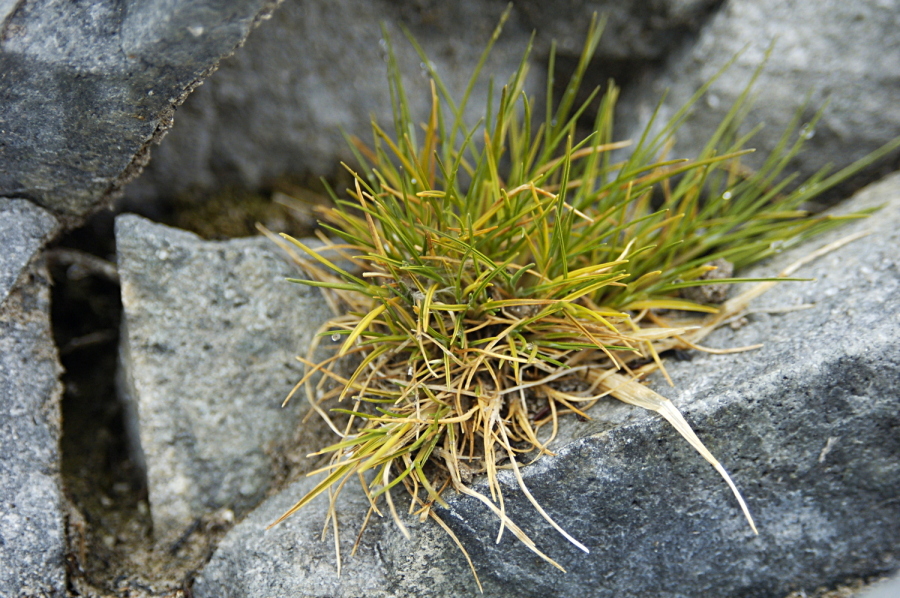
The Antarctic Peninsula is one of the fastest changing regions on the planet. It is warming at one of the fastest rates on Earth. Also, invasive species are becoming an increasing problem. Invasive grasses and insects have been spotted along the Peninsula. Some of these species are accidentally brought from other continents by people. Also, because the Peninsula is warming, some Antarctic species can spread farther south into areas that used to be too cold for them to survive. This grass on the right, the Antarctic hair grass, has been spreading southward into new habitats.
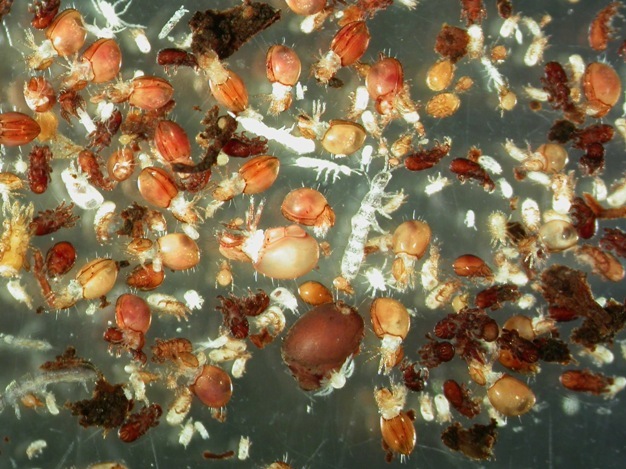
Of course, these changes in climate and invasive species can influence the biology living in the soil. If you're read my past posts, you'll know that the soil biology include bacteria, fungi, nematodes, mites, and other tiny invertebrates. The microscopic soil biology are the only year-round terrestrial animals on Antarctica. There are birds, seals, and penguins that live in Antarctica, but these are technically marine animals that sometimes come on land. Though the soil biology are small, they are the continent's only true inhabitants. This makes them very important to study, if we want to understand more about Antarctica!
From the hard work already done on the Antarctic Peninsula by many scientists, we know that the soil biology of the Peninsula is more abundant and diverse than in the McMurdo area where I usually work. That means there are more individuals from a larger number of species living in the soil in the Peninsula region. However, the Peninsula is a large area, and the soil biology in many places along the Peninsula have not been closely studied. We don't even know who lives where, and if we've seen all of the species that live there. How can we understand the impacts of this recent rapid change, if we don't even know who is there naturally?
Our research over the next couple of seasons will explore the diversity of soil biological communities along the entire Antarctic Peninsula. We will discover what species live in all of the places we visit. We will also compare who lives at each site with the plants and soil chemistry to understand how the environment influences the soil biology. That way, we can predict what will happen to the soil biology as the environment changes. Some of these species only live in Antarctica, so it's important to know how we can protect them. If they lose their home in Antarctica, they may be lost forever!
 |
| Image from Wikipedia |
 |
| Image from Nature Education |
From the hard work already done on the Antarctic Peninsula by many scientists, we know that the soil biology of the Peninsula is more abundant and diverse than in the McMurdo area where I usually work. That means there are more individuals from a larger number of species living in the soil in the Peninsula region. However, the Peninsula is a large area, and the soil biology in many places along the Peninsula have not been closely studied. We don't even know who lives where, and if we've seen all of the species that live there. How can we understand the impacts of this recent rapid change, if we don't even know who is there naturally?
Our research over the next couple of seasons will explore the diversity of soil biological communities along the entire Antarctic Peninsula. We will discover what species live in all of the places we visit. We will also compare who lives at each site with the plants and soil chemistry to understand how the environment influences the soil biology. That way, we can predict what will happen to the soil biology as the environment changes. Some of these species only live in Antarctica, so it's important to know how we can protect them. If they lose their home in Antarctica, they may be lost forever!
Tuesday, April 8, 2014
How to become a polar scientist
Are you interested in polar science? Are you curious about how polar ecosystems work and what kind of change is happening in them? Do you like going out to find the answers to your questions? Do you want to learn about and explore polar regions as a career?
 When I was a kid, I didn't know I would become a field scientist in Antarctica. I wanted to be a veterinarian, because I liked animals. I didn't know that scientific research was a possible career. Once I realized that I could make a career out of studying animals outside in the natural world, I liked that idea much more! Then I realized that I could work all over the world, and my field work could happen in all sorts of places. I liked the adventure of travel, so I took an opportunity to work in Antarctica, and that's how I ended up doing what I do. I get to travel to many places around the world, ask questions about how the ecosystem works, then find out the answer to those questions. I have a pretty fun job!
There are many fields of science that you can study in the Antarctic and Arctic. There are biologists and biogeochemists like me. Biologists can study invertebrates (like we do), microbes, plants, or the more charismatic animals like penguins, other birds, whales, and seals.
There are also oceanographers who study ocean biogeochemistry and the movement of ocean water (circulation) around the polar region, which has an important role in understanding climate change.
Glaciologists study the composition and dynamics of the glaciers and ice sheets in the Antarctic and Arctic, where most of the planet's fresh water is stored. Many of them study climate change through the ice record.
Geochemists study the elements found in the streams, glaciers, soil, and lakes.
Other geologists study the rocks that make up the continent of Antarctica to understand how the continent formed, plus vulcanologists who study Mt. Erebus, the southern-most active volcano on the planet.
There are astronomers who work in Antarctica using telescopes or collecting meteorites, some even using it as a proxy for Mars. Atmospheric scientists study ozone and air quality, and physicists study subatomic particles.
Geographers use satellite and radar imagery to map the continent. There are also engineers that run the satellites and telescopes. Historians document and preserve the 100+ years of human exploration of polar regions.
Click on any of the links in this paragraph to learn about that type of research. There are tons of things you can study in polar regions!
What do you have to do to become a polar scientist? Most polar scientists have college and graduate degrees (a masters degree and/or Ph.D.) in their particular field of science. (Or, they're students currently working towards achieving those degrees.) I went to college and earned a bachelors degree in biology, then went to graduate school to get a Ph.D. in ecology/biogeochemistry. If you want to become a polar scientist, it will involve working very hard in (and enjoying!) a lot of science classes. There are probably two basic characteristics that are true of every professional scientist: they're incredibly curious and willing to work very hard. Polar scientists also have an itch for adventure. The reward is that we get to make a career out of exploration to find answers to all of our questions!
 |
| Science in a penguin rookery |
 |
| The Oden: icebreaker and research vessel |
There are also oceanographers who study ocean biogeochemistry and the movement of ocean water (circulation) around the polar region, which has an important role in understanding climate change.
Glaciologists study the composition and dynamics of the glaciers and ice sheets in the Antarctic and Arctic, where most of the planet's fresh water is stored. Many of them study climate change through the ice record.
 |
| Stream geochemists at work. |
 |
| Mt. Erebus |
There are astronomers who work in Antarctica using telescopes or collecting meteorites, some even using it as a proxy for Mars. Atmospheric scientists study ozone and air quality, and physicists study subatomic particles.
 |
| Tools for LIDAR imagery |
Click on any of the links in this paragraph to learn about that type of research. There are tons of things you can study in polar regions!
What do you have to do to become a polar scientist? Most polar scientists have college and graduate degrees (a masters degree and/or Ph.D.) in their particular field of science. (Or, they're students currently working towards achieving those degrees.) I went to college and earned a bachelors degree in biology, then went to graduate school to get a Ph.D. in ecology/biogeochemistry. If you want to become a polar scientist, it will involve working very hard in (and enjoying!) a lot of science classes. There are probably two basic characteristics that are true of every professional scientist: they're incredibly curious and willing to work very hard. Polar scientists also have an itch for adventure. The reward is that we get to make a career out of exploration to find answers to all of our questions!
Thursday, March 13, 2014
Moribund Moss Rehydrating
In my previous post, you see two different photos of moss in the McMurdo Dry Valleys. In one photo, the moss is green. In the other, it's very grey and brown.
Because the Dry Valleys are so dry, normally moss is kind of shriveled and brown. It looks like it might be dead, but it's not! That stage is called "moribund", which basically means "looks dead." As soon as the moss gets wet, it perks right up! In the photo with the green moss, the moss had recently gotten wet from the flow of the stream.
Here's a video through the microscope of some moss. At first, it is shriveled and brown. As soon as I squirt some water onto it, though, the moss opens up and turns green again. I did not change the speed of the video. That's happening in real-time! (Sorry, the video was recorded using my phone through the eye-piece of the microscope, so it's not the greatest quality.)
In fact, a recent article shows how a little warmth, light, and water can revive moss that has been "long dead". Read about the 1500-year-old moss from Signy Island on the Antarctic Peninsula here.
Wednesday, March 12, 2014
A tale of moss and soil in the Dry Valleys
I've posted before about some of our field work sampling moss in the McMurdo Dry Valleys.

 Moss
are important to understand because, in the Dry Valleys, there are no
other plants growing above the soil. Moss patches are the closest thing
that the Dry Valleys have to forests! Sometimes the moss grows in small
patches, like in the top photo on the left, but sometimes it's extensive, like the photo below it.
We want to understand the role moss play in the overall ecology of the Dry Valleys. How abundant are they across the ecosystem? How much nutrients do they take up from the environment? Where do their nutrients come from?
We traveled all around the Dry Valleys to collect moss from as many places as we could find. You can see an interactive map of all of the samples we collected by clicking here.Thanks to amazing satellite imagery, you can zoom in close enough to see the terrain at each of the spots where we took a moss sample!
We wanted to know whether moss can live everywhere in the Dry Valleys, or if there has to be very particular environmental conditions for them to grow. We compared soil chemistry in places where moss was growing with places where moss was not growing. We learned that soils beneath moss tend to be slightly less salty and lower in pH (more neutral than basic) than soils without moss growing on them. That may be the result of the moss needing to grow in less salty, more neutral soil. (In other words, maybe the soil is already less salty and lower pH, so the moss are able to grow there.) Or, it could be that moss can grow anywhere and then turn the soil into something less salty and more neutral. (In other words, maybe the soil becomes less salty and lower in pH after the moss starts growing there.) We don't know yet! That's something we can look into with more experiments.
We also learned that there is a lot of variability in the nutrient content of moss. Sometimes the moss at one site differs in nutrient content from moss at another site. For example, moss growing at Canada Stream contained more nitrogen and phosphorus than moss growing at other places. (Those are the yellow dots in the graph below. They're higher up on the vertical axis than many of the other sites, which are the other color dots.) Moss growing in the Lake Bonney Basin had the lowest nitrogen and phosphorus content of the moss we sampled. (They're hard to pick out of the graph, though, because they're overlapped by so many other dots.) Often, though, the nutrient content in moss varies a lot within one site, making it hard to tell sites apart. Of the dozens of sites we visited, the only ones that seemed distinct in nutrient content were the extremely high and extremely low. The rest blend in with each other, as you can see in the graph.

We also learned that most of the nutrients in the moss come from the soil, rather than water. However, the soil doesn't explain everything. In the graph above, you see that as soil nitrogen and phosphorus increases (moving towards the right on the horizontal axis), moss nutrients also tend to increase (moving higher on the vertical axis), but there's a LOT of variability around that. The dots don't stay close to the line, but instead are scattered around.
(For those that are curious, the purple dot waaaay out to the right on the phosphorus graph is moss from one of the penguin rookeries. Penguin guano contains a lot of phosphorus!)
The relationships with soil are tighter than with water's levels of nutrients, though. That's why, in this graph below, the triangle representing moss nitrogen (N) content is closest to the arrow for soil N, not Stream or Groundwater N. The triangle for moss phosphorus (P) content is closest to soil PO4 (phosphate), not Stream or Ground PO4. You'll notice that the relationship between moss and soil N is a bit tighter than moss and soil P, though.

So what does all of this mean? If the pulse events that I describe in earlier posts make water more available in the future, moss may be able to grow more. We were hoping that we could predict how nutrient cycles would change by knowing the source of moss nutrients and how much they take up. However, we learned that their nutrient uptake is highly variable, which will make it hard to predict how nutrient cycling will change with that increase in moss growth.
The results of this experiment are published in the article: Ball B. and Virginia R. 2014. The ecological role of moss in a polar desert: Implications for aboveground-belowground and terrestrial-aquatic linkages. Polar Biology.
Moss
are important to understand because, in the Dry Valleys, there are no
other plants growing above the soil. Moss patches are the closest thing
that the Dry Valleys have to forests! Sometimes the moss grows in small
patches, like in the top photo on the left, but sometimes it's extensive, like the photo below it.We want to understand the role moss play in the overall ecology of the Dry Valleys. How abundant are they across the ecosystem? How much nutrients do they take up from the environment? Where do their nutrients come from?
We traveled all around the Dry Valleys to collect moss from as many places as we could find. You can see an interactive map of all of the samples we collected by clicking here.Thanks to amazing satellite imagery, you can zoom in close enough to see the terrain at each of the spots where we took a moss sample!
We wanted to know whether moss can live everywhere in the Dry Valleys, or if there has to be very particular environmental conditions for them to grow. We compared soil chemistry in places where moss was growing with places where moss was not growing. We learned that soils beneath moss tend to be slightly less salty and lower in pH (more neutral than basic) than soils without moss growing on them. That may be the result of the moss needing to grow in less salty, more neutral soil. (In other words, maybe the soil is already less salty and lower pH, so the moss are able to grow there.) Or, it could be that moss can grow anywhere and then turn the soil into something less salty and more neutral. (In other words, maybe the soil becomes less salty and lower in pH after the moss starts growing there.) We don't know yet! That's something we can look into with more experiments.
We also learned that there is a lot of variability in the nutrient content of moss. Sometimes the moss at one site differs in nutrient content from moss at another site. For example, moss growing at Canada Stream contained more nitrogen and phosphorus than moss growing at other places. (Those are the yellow dots in the graph below. They're higher up on the vertical axis than many of the other sites, which are the other color dots.) Moss growing in the Lake Bonney Basin had the lowest nitrogen and phosphorus content of the moss we sampled. (They're hard to pick out of the graph, though, because they're overlapped by so many other dots.) Often, though, the nutrient content in moss varies a lot within one site, making it hard to tell sites apart. Of the dozens of sites we visited, the only ones that seemed distinct in nutrient content were the extremely high and extremely low. The rest blend in with each other, as you can see in the graph.
We also learned that most of the nutrients in the moss come from the soil, rather than water. However, the soil doesn't explain everything. In the graph above, you see that as soil nitrogen and phosphorus increases (moving towards the right on the horizontal axis), moss nutrients also tend to increase (moving higher on the vertical axis), but there's a LOT of variability around that. The dots don't stay close to the line, but instead are scattered around.
(For those that are curious, the purple dot waaaay out to the right on the phosphorus graph is moss from one of the penguin rookeries. Penguin guano contains a lot of phosphorus!)
The relationships with soil are tighter than with water's levels of nutrients, though. That's why, in this graph below, the triangle representing moss nitrogen (N) content is closest to the arrow for soil N, not Stream or Groundwater N. The triangle for moss phosphorus (P) content is closest to soil PO4 (phosphate), not Stream or Ground PO4. You'll notice that the relationship between moss and soil N is a bit tighter than moss and soil P, though.
So what does all of this mean? If the pulse events that I describe in earlier posts make water more available in the future, moss may be able to grow more. We were hoping that we could predict how nutrient cycles would change by knowing the source of moss nutrients and how much they take up. However, we learned that their nutrient uptake is highly variable, which will make it hard to predict how nutrient cycling will change with that increase in moss growth.
The results of this experiment are published in the article: Ball B. and Virginia R. 2014. The ecological role of moss in a polar desert: Implications for aboveground-belowground and terrestrial-aquatic linkages. Polar Biology.
Friday, February 14, 2014
Fertilizing soil microbes
We wanted to know how a bit more about how the microbes responded to the nitrogen fertilization. Do bacteria and fungi respond differently? Does nitrogen influence the amount of microbes in the soil, or just how active they are? How does the nutrient content already in the soil influence how the microbes respond to new nutrient additions?
 In the lab, we set up "miniature Dry Valleys" in jars. Each one of the jars in the picture has soil from the Dry Valleys. Half have soil from Lake Fryxell basin (which is naturally higher in phosphorus) and the other half has soil from Lake Bonney basin (which is naturally higher in nitrogen). We added different amounts of nitrogen to the jars. Some received low levels, some received medium levels, and some received high levels. (Others received no nitrogen at all, which was our control.) We tested our hypothesis that increasing the level of nitrogen would increasingly stimulate biology at Fryxell, where nitrogen is less plentiful than phosphorus. However we hypothesized that, when nitrogen was already plentiful (at Bonney), the higher levels of nitrogen addition would actually be toxic to the soil microbes. That's because nitrogen exists in the soil as a salt, and too much nitrogen can make the soil too salty to be healthy for the microbes.
 The jars are sealed tightly so that no gas can escape. That way, all of the CO2 produced by the microbes as they respire stays trapped inside the jar. In the center of the lid is a silicone disc. The silicone keeps the gas trapped inside, but as you can see in the photo to the left, I can insert a needle through the disc to remove a sample of gas. I then measure the CO2 that is contained in the gas sample I removed by injecting that sample into the machine you see below. We also counted the number of bacterial and fungal cells in the soil using a microscope.

What did we learn from this experiment? We found that microbes were only moderately influenced by nitrogen addition. As we predicted, the highest level of nitrogen had a negative effect on bacteria at Bonney (where nitrogen is already plentiful), because high levels of nitrogen become toxic to the bacteria. Fungi, however, weren't harmed by the high levels of nitrogen. Lower levels of nitrogen stimulated bacteria at Fryxell (where nitrogen is less plentiful), because adding more of a limiting nutrient allowed them to grow more and be more active.
What does all of this mean, in the big picture? It means that nitrogen fertilization can influence carbon dynamics in soils of the Dry Valleys. If future changes in the Dry Valleys bring more nitrogen to the soil, it's not only nitrogen that will change. Respiration means microbes are eating carbon in the soil, so the changing respiration we measured means the amount of carbon lost from the soil will also change. However, the way it changes will depend on where in the Dry Valleys you are. In some places, like Bonney, there may be less respiration and carbon loss, but in other places, like Fryxell, there may be more respiration and carbon loss.
The results of this experiment are published in this article: Ball B, Virginia R. 2014. Microbial biomass and respiration responses to nitrogen fertilization in a polar desert. Polar Biology 37(4): 573-585.
Subscribe to:
Posts (Atom)


 Posts


