Sunday, February 20, 2022

Invasive species in Antarctica

Antarctica is a harsh continent, so only specialized organisms survive here. These are species that evolved to withstand the freezing temperatures, periods of darkness, and lack of water (and in some places, lack of food!).

Because of the warming climate, though, organisms from other continents can survive in Antarctica now. If those foreign species arrive in Antarctica, they might not die in the harsh habitat like they would have a few decades ago. The Antarctic Peninsula has a growing problem with invasive species. 

One invasive species in Antarctica is a grass. I've told you about the one native species of grass, the Antarctic hairgrass (Deschampsia antarctica). In Antarctica, it can only survive on the northern end of the Antarctic Peninsula. There is also an invasive grass that has been able to move into some areas. That grass is Poa annua, also called bluegrass or meadow grass. It is a species of grass that grows in a lot of places over Europe, Asia, and North and South America, but was not able to survive in Antarctica. But now it can, and it has established itself on King George Island where we are working. This is a problem, because it is a grass that is very good at outcompeting other grasses, so can take over an ecosystem. That is especially possible if the climate continues warming in Antarctica! How did it get there? People visiting Antarctica, carrying seeds in their boots or gear without realizing it.

Poa annua reported by Znoj et al. in this paper.

There is also an invasive species of midge that has moved in on the Peninsula. There is a native midge I've already told you about (Belgica antarctica), but there are also distant relatives of that midge that now live in Antarctica (Eretmoptera murphyi). How did they get here? They were brought in by accident in some potted plants that were being moved to Antarctica from other islands north of Antarctica for a scientific experiment. (That is why there are such careful restrictions about transporting soil and plants now!) This new midge is unlike any other organism that lives on Antarctica: it eats dead plant material. The islands along the Antarctic Peninsula are covered in a lot of dead plant material from old moss and grass. (Because nobody lives forever, but its decomposition is naturally very slow so it builds up over the years.) So, the invasive midges have a lot of food, but no predators living there, so they can grow and reproduce a lot! They can eat a lot of the dead plants, recycling the nutrients and creating soil much faster than would happen naturally. It is a level of consumption that does not naturally exist in this area! They create so much change that they can be considered an "ecosystem engineer". 
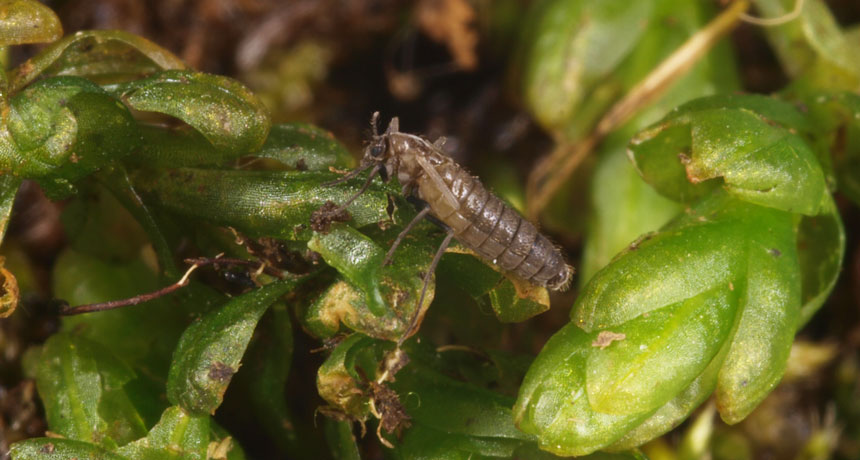
You can read an article about this pesky alien midge here.

The midge isn't the only invasive insect in Antarctica. On King George Island, where our work is based, there is another invasive insect called Trichocera maculipennis. This is a crane fly that is native to the northern hemisphere, mostly in Europe, so it moved a long way! They survive around sewage systems of the research bases on the island. This species of fly can actually fly! They can survive out in the natural environment away from the sewage, which is how they can move from station to station. This species exists here at Escudero station, and one has already flown into one of our samples!
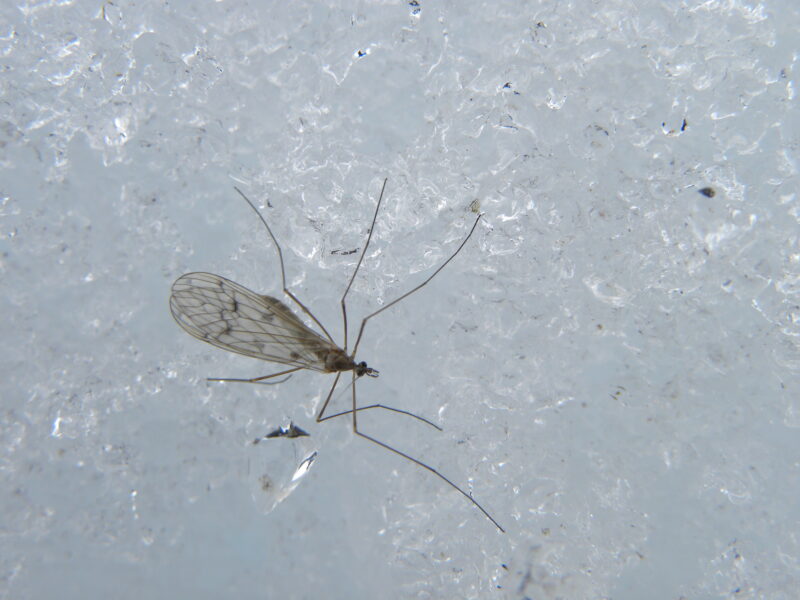
You can read about this species and other invasive species with the British Antarctic Survey.

These species were all accidentally introduced by people, because their larvae and seeds are so small that people didn't notice them on the products they were bringing into Antarctica. We are much more aware of it now, and we are now required to sterilize our boots in between each place we visit in Antarctica so that we do not keep moving them into new places. We have to avoid future damage from bringing in new species that might tip the natural balance in Antarctica!

Saturday, February 19, 2022

Collecting data

To collect our soil and plant samples, we use a corer. That's a piece of metal pipe that is in Hannah's hand in the photo below. That cuts out a piece of the plant, which we put in a small envelope. (Those are in the ziplock bags next to Hannah). 


Then we scoop the soil from underneath it into a plastic bag. The plants and soil are taken back to the lab for analysis.

We will do most of our measurements on the samples back in the U.S. We have to spend our time in Antarctica collecting the samples and setting up experiments. We just don't have time while we're here to collect all the data on the samples! We will ship the soil home frozen at -20°C. Those temperatures would kill most of the microbes and invertebrates, though! We extract the organisms from the soil here in Antarctica before we freeze them.
In my lab at Arizona State University, I have special equipment to look at the invertebrates. But equipment is heavy and takes up a lot of space, and we can't bring it all with us. So, in Antarctica, we have to get creative!  
This is how we extract arthropods like mites and collembola. We use heat created by light bulbs.
We use aluminum cans because they are smooth and shiny, which reflects the light from the bulb to keep it bright and warm inside the can.

These arthropods like to be cool and moist. If the soil gets too warm or dry, they will crawl deeper into the soil where it is cooler. We use that behavior to get them out of the soil. Each of these cans has a soil sample inside of it. We then put a string of outdoor Christmas lights over the top. The heat from the light bulb warms up the soil. The arthropods try to move deeper in the soil... except there's no more soil. They fall through the funnel into our little bottle. Now we've trapped them out of the soil and can look at them under a microscope!
Each can has a soil sample wrapped up in a little piece of gauze. The heat from the lightbulb is what makes them want to move down into our funnel.

Smaller invertebrates like nematodes and tardigrades don't respond to heat. These tiny invertebrates live in the water in the soil. To get them out of the soil, we use water and gravity.  
Each of these funnels contains a small soil sample wrapped in a tissue. We fill the funnel with water, and the nematodes swim away from the soil to float in the water. But gravity wins! They sink down to the bottom stem of the funnel, and we will capture that water in a bottle.

At ASU, I have sturdy stands that hold our funnels. We needed to pack light, so I made stands here out of cardboard boxes. It is very fancy, don't you think? The samples sit in the funnels for 5 days. These small invertebrates do not move fast, so it takes time! We put our first batch of samples onto the funnels on Wednesday, which means in a few days, I should have some invertebrates to show you!

Thursday, February 17, 2022

Field day

The Collins Glacier here on King George Island has been shrinking. The edge of the glacier has receded back further than it was even just a few years ago. That has exposed soil that is now undergoing succession, which is the focus of our research this year.

One of the ways we are studying succession is by looking at the plants and soil that have been exposed for different lengths of time. Yesterday, we collected samples from the early succession zone that has recently been uncovered by the glacier. This area is still fairly close to the glacier, like you can see in this photo:

This soil has been exposed for only a few years. There are moss and lichens growing on it, but only certain species that are good at being "pioneers". They tend to like wet areas, because the melting glacier provides a lot of it. But they have to be able to gather nutrients in creative ways, because there is not a lot in the soil yet. Those are species like moss in the genus Sanionia, and cyanobacteria who are able to fix nitrogen from the atmosphere.

This moss is in the genus Sanionia. It likes living in wet places, like this channel where melt water flows down from the glacier.

We will also take samples further from the glacier, all the way out into the areas that have been exposed for a long time. These sites have had enough time to reach a "climax community", which is the mature, fully-developed plant community.  That would be a place like I showed you a couple days ago from our scouting trip:

A climax community on King George Island has many species of moss, not just the hardy pioneer species, as well as the grass. The Antarctic hairgrass requires a lot of nitrogen to grow, but can't fix it from the atmosphere like a cyanobacteria. They can only arrive later in succession when the cyanobacteria have done the work for them!

So we are taking samples from across these successional zones: some from early succession, some from a transitional "mid-succession" zone with a few more moss species and grass starting to move in, and then from the "climax community". We use the samples we take to learn about the soil conditions and the community of microorganisms that live at those successional zones. We know that the plants change like I showed you in the photos, but how do the soil invertebrates change as the ecosystem ages? How does that relate to the chemistry of the soil? These are the questions we will be able to answer with our samples.

Tuesday, February 15, 2022

Tour of Escudero

When we woke up today, we found that the weather is very rainy and foggy. There will be no field work today! It is not safe to leave the base when visibility is low. This was our view out the window during breakfast. There's an ocean out there just beyond the blue building, but you can't see it!


Since we can't go anywhere, I'll show you around the research station a little bit. Most of our time is spent in the main building. (That's the building with the flags in front from yesterday's post.) When we come in from outside, we have to take off our big coats and boots so that we don't track dirt and snow all over the building. We put our boots on the shelf and put on our indoor shoes (kind of like Mr. Rogers). The door to the left in the photo goes to the lounge area with couches and a TV. The kitchen is at the back of that room where we eat our meals.

We spend most of our day in the lab, getting ready for our field work and preparing for our samples. It is a long room that is shared by many scientists working on different projects.


There is a dormitory where we sleep. We have bunk-beds and a couple pieces of furniture to put away our clothes. Here is the room that Dr. Hannah and I share. It is small, but we don't spend much time there, because we are busy working!


There are two bathrooms in the dormitory, for about 20 people to share. There can be a line to use the bathroom! (Often I'll just walk over to the lab to use the bathroom there.) We have to be very careful about conserving water in Antarctica, because we have to clean the water at the station and not allow any to be released on land. The shower has a button you push to release the water, but it only runs for about 15-20 seconds per push. That keeps us from letting the water run too long. You only push the button when you need to rinse.

So now you've seen a bit about where we live and work at the station. Tomorrow we will hopefully have better weather so that we can start our experiments!

Monday, February 14, 2022

We have been settling into our new home at Escudero. We are now official visitors of Escudero, because our U.S. flag is on the pole in front of the station!

Escudero flies the Chilean flag at the top, but also the flags of the other scientists working at their station. There are four Columbian scientists here, which is the flag on the left. And there is Dr. Hannah and me from the U.S., so our flag is up, too! The flags on the right are for Magallanes, the region of Chile where Punta Arenas is, and one for INACH.

We have spent our first couple of days on the station scouting for the field sites we will use for our experiments. Yesterday we hiked along the southwest side of the glacier, and today we were on the east side. Here are some photos of the places we were exploring. Hopefully they give you a feel for the area where we are working.

We will be taking samples along a successional gradient from the edge of the glacier you see at the back of this photo. It is called the Collins glacier.

The Collins Glacier drops down off of King George Island into the ocean. Here, on the "back side" of the glacier, we are on a bay of the Drake Passage (on the west side of the island).

We are looking for areas with ample plant growth where we can collect samples. Here you see a LOT of moss, with some algae and lichen, growing on an outcrop. The glacier is behind us.


Sunday, February 13, 2022

Welcome to Escudero

We finally made it to Antarctica!

The weather on Saturday allowed us to fly. We gathered together in the hotel for the first time. This is everybody traveling to Escudero to join the crew that is already there:

We boarded the plane and flew to King George Island.

Our airplane is painted to look like a penguin. Do you see it?

It was an easy flight, which is good because the wind on the surface below is on the Drake Passage was blowing at 50 km per hour (about 30 mph)! I'm glad we were not on a ship sailing across it.

We landed at the air strip on King George Island. You are probably used to paved runways at airports. Ours is made of dirt. 

Antarctic air traffic control

We then walked from the air strip to Escudero Base, about a half a mile away.

We have been getting oriented to our new home and getting settled into the lab so that we can begin our research. We're now a few days behind schedule, since we were stuck in Punta Arenas. So, we will 'hit the ground running', as they say! Sunday we will hike out to begin exploring potential field sites for our experiments.

Thursday, February 10, 2022

Hurry up and Wait

Our flight this morning was a no-go. This is how it goes with Antarctic research. It is a windy continent, and with no help nearby, you don't want to take risks. We often get rushed from one place to another just to sit around and wait. We woke up at 5:30 am and went to the airport, but we had to turn around and come back to the hotel because the flight to Antarctica was canceled. They are predicting it will be Saturday when we can try next. At least we got a brief moment out of the hotel room and finally met some of the other scientists heading to Escudero with us!

So, now we are back in quarantine! It's been 9 days now. We do our best to stay busy. It helps if we get up and move a bit, even though there's not a lot of space in the hotel rooms. Dr. Hannah and I are using  Richard Simmons workout videos on the internet to stay moving. We like the fashion from the 1980s episodes. (Don't know who Richard Simmons is? Ask your parents!)

Dr. Angélica prefers this one:


We also like to spy on the boats on the Strait of Magellan outside our window. There are fishing boats, cruise ships, cargo ships, tug boats, and all sorts of boats to watch. Do you want to see the boats we're watching? You can spy on them, too! MarineTraffic